
Growing “A Head Taller”: Leadership, Learning, and the Sociocultural Lens of Early Childhood
Growing up in a home where four and sometimes five generations gathered regularly, I experienced firsthand the power of relationships, storytelling, and shared play as catalysts for development. Summers were spent camping without electronics, where my sister and I played board games by lantern light, told stories around the fire, and explored the outdoors. These experiences offered more than entertainment; they provided authentic opportunities for problem-solving, negotiating social rules, and developing persistence. These early experiences shaped my conviction that learning is relational, contextual, and deeply enriched through play.
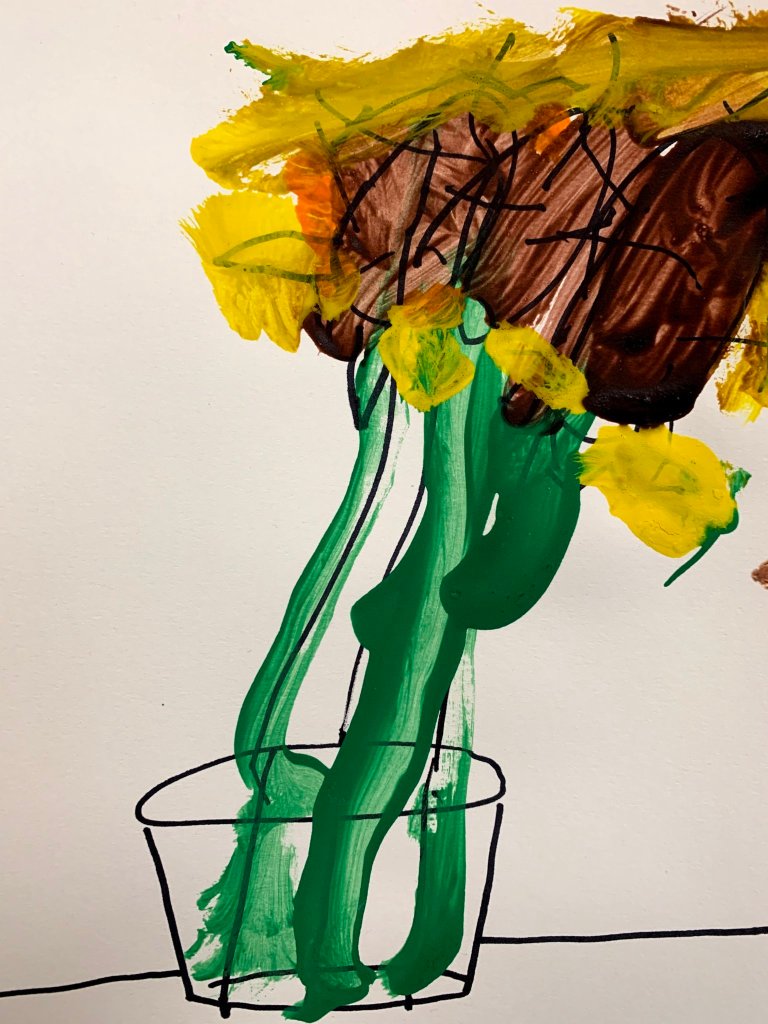
Artowrk by M.C. 2015

About the author
Amber Myers
As the Coordinator of Early and Elementary Learning at the West Virginia Department of Education, I draw upon a diverse background that included roles as a literacy specialist, curriculum specialist, assistant professor, laboratory preschool director, classroom educator, consultant, and STEAM lab facilitator. My professional journey has been shaped by a commitment to fostering engaging, equitable, and developmentally appropriate learning experiences for young children. Currently dually enrolled in the Education Specialist (Ed.S.) and Doctor of Education (Ed.D.) programs at Marshall University, I continue to bridge theory and practice by designing initiatives that support educators in implementing evidence-based instruction, nurturing language-rich environments, and aligning practice with the latest research in child development and learning sciences.
My professional philosophy is deeply grounded in Lev Vygotsky’s sociocultural theory and Jean Piaget’s constructivist framework, both of which emphasize the social and experiential nature of learning. I view the classroom as a community of inquiry where collaboration, scaffolding, and play serve as powerful catalysts for growth. Learning occurs most meaningfully within the Zone of Proximal Development (ZPD), where guided exploration and productive struggle help children extend their thinking “a head taller” than before. By integrating these perspectives, I strive to create and advocate for environments that balance social interaction with individual discovery—spaces where curiosity, creativity, and critical thinking thrive, and where both children and educators grow together as lifelong learners.
Artwork Acknowledgment
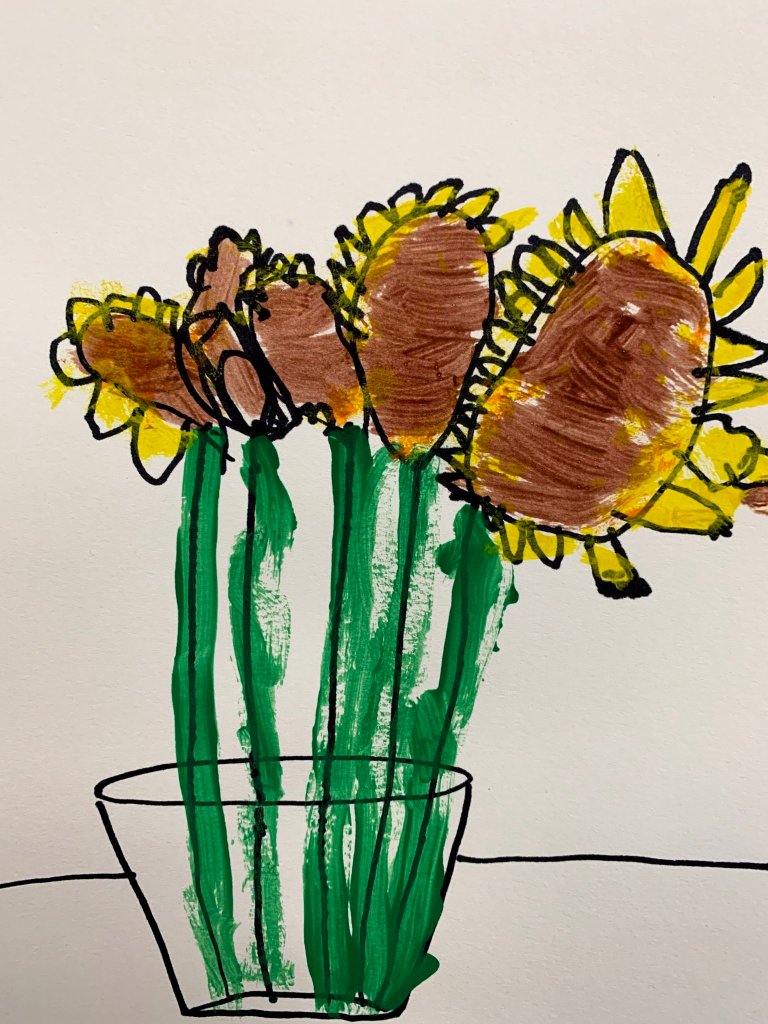
The artwork showcased throughout this portfolio—featuring paintings of sunflowers created by past West Virginia Pre-K students—symbolizes the theme grow “a Head Taller.” Just as sunflowers turn toward the light, children flourish when given the opportunity to reach upward through play, exploration, and meaningful interaction. Each painting reflects the wonder, growth, and resilience that define early learning and the joyful spirit of the classrooms that inspire my work.
Artwork by J.M. 2015
“Children are capable of constructing their own learning. They are driven by curiosity and imagination.”
(Malaguzzi, 1998)
Reggio Emilia’s philosophy complements Vygotsky’s “head taller” idea by emphasizing that growth happens through relationships and exploration. His view honors the child’s agency and creativity, reminding educators that the role of the teacher is to nurture this potential through collaboration and an environment that acts as a “third teacher.”
 Growing “A Head Taller”: Leadership, Learning, and the Sociocultural Lens of Early Childhood